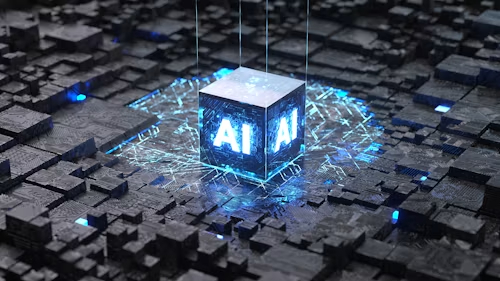
See how AI is revolutionizing software development! Unlock faster coding, automated testing, stronger security, and smarter innovation.
Artificial intelligence is changing the way businesses build, manage, and improve software. What once required long development timelines, heavy manual coding, repeated testing, and large technical teams can now be supported by AI-powered tools that make software development faster, smarter, and more efficient.
Today, AI helps developers write code, detect bugs, generate documentation, test applications, improve cybersecurity, support project management, modernize legacy systems, and build intelligent business applications. However, AI does not remove the need for experienced developers or professional software development companies. Instead, it changes how software teams work and increases the value of technical expertise.
For businesses, this shift creates a major opportunity. Companies that understand how to use AI in software development can launch products faster, automate manual processes, improve customer experience, reduce errors, and compete more effectively in a digital economy. Businesses that delay may struggle to keep up with competitors that are already using AI-assisted development to move faster.
At DelonApps, we help businesses design, build, manage, and scale reliable software solutions. As AI continues to shape the future of software development, organizations must understand how to apply it strategically, securely, and practically.
1. AI Is Making Software Development Faster
One of the biggest ways AI is changing software development is through speed. Traditionally, developers had to write most code manually, search through documentation, debug errors line by line, and build standard components from scratch. AI now supports many of these repetitive tasks.
AI coding assistants can suggest code snippets, complete functions, explain technical concepts, and help developers identify possible solutions faster. This allows developers to spend less time on routine coding and more time on architecture, business logic, security, performance, and user experience.
For companies, this can reduce time to market. A business that wants to build a new application, automate an internal process, or test a digital product idea can move faster with AI-assisted development. This is especially useful for startups, SMEs, and growing enterprises that need speed but cannot afford poorly managed development projects.
However, speed must not replace quality. AI-generated code still needs to be reviewed, tested, secured, and aligned with the business goal. This is why companies still need experienced software professionals who can turn AI-assisted work into reliable business solutions.
For businesses that need faster delivery, DelonApps has also explained how dedicated development teams help you launch faster. AI can support speed, but the right development team provides the structure, discipline, and technical leadership required to deliver successful software.
2. AI Is Improving Developer Productivity
AI is not just helping developers write code faster; it is also improving overall productivity. Developers often spend time on tasks such as documentation, creating test cases, checking syntax, formatting code, reviewing existing logic, and troubleshooting errors. AI tools can support many of these activities.
For example, AI can help developers understand unfamiliar code, summarize what a function does, suggest improvements, generate technical documentation, and identify inefficient code. This is particularly useful when developers join an existing project or work on large systems with many modules.
Improved productivity benefits businesses because projects can move faster, costs can be better controlled, and teams can focus more on features that deliver real value. However, AI works best when used within a structured software development process.
This is why companies that do not want to manage a full internal technical team may choose to work with a professional development partner. DelonApps has written about the smarter way to build software without managing a tech team, which is especially relevant in an AI-driven development environment.
3. AI Is Helping Businesses Move from Idea to Product
Many companies have good software ideas but struggle to turn them into working products. Delays often happen because of unclear requirements, poor planning, limited technical resources, or weak project management. AI can reduce some of these delays by making planning, prototyping, and early development faster.
AI can help generate user stories, suggest feature lists, summarize requirements, create documentation, and support early stage product planning. Developers can also use AI tools to build prototypes more quickly and test technical possibilities before committing to full-scale development.
This means businesses no longer need to wait too long before testing a digital idea. With the right approach, a company can move from concept to prototype, gather feedback, and improve the product before making a larger investment.
DelonApps has discussed this further in From Idea to Product: How to Build Software Without the Usual Delays. AI can reduce delays, but a strong development process is still needed to make sure the final product solves a real business problem.
For startups and SMEs, this also connects to the idea of an MVP, or minimum viable product. Instead of building every feature at once, companies can begin with the most important features, test them with users, and improve gradually. DelonApps’ article on the meaning of MVP in software development and why it matters is useful for businesses that want to test software ideas faster while controlling cost and risk.
4. AI Is Transforming Software Testing and Quality Assurance
Testing is one of the most important parts of software development. Without proper testing, an application can fail when users begin to use it. Bugs, broken features, security issues, poor performance, and bad user experience can damage customer trust and create financial losses.
AI is making testing faster and more intelligent. AI-powered testing tools can generate test cases, identify risky areas of an application, detect unusual behaviour, and predict where errors are likely to occur. They can also support regression testing, which ensures that new updates do not break existing features.
For example, in an e-commerce application, AI-assisted testing can help check login pages, product search, payment flow, cart behaviour, order confirmation, mobile responsiveness, and customer notifications. In a business management system, AI can test approval workflows, user permissions, reports, dashboards, and data entry forms.
This does not remove the need for quality assurance professionals. Instead, it changes their role. QA teams can focus more on test strategy, user experience, business scenarios, compliance, and interpreting AI-generated results.
5. AI Is Helping Businesses Build Smarter Applications
AI is not only changing how software is developed; it is also changing the kind of software businesses can build. Modern applications can now include intelligent features that improve automation, personalization, prediction, reporting, and decision-making.
Businesses can use AI to build chatbots, recommendation engines, fraud detection systems, HR analytics tools, automated document processing systems, predictive dashboards, smart search tools, and workflow automation platforms.
These features are no longer limited to large global corporations. Smaller businesses can now integrate AI capabilities through APIs, cloud platforms, and custom-built applications. This means SMEs, startups, and mid-sized companies can also use AI to improve operations and customer experience.
For example, a recruitment business can use AI to help match candidates with job roles. A healthcare company can use AI to improve appointment scheduling and patient communication. A financial services firm can use AI to detect unusual transactions and improve compliance workflows.
At DelonApps, custom software development is not just about writing code. It is about understanding business problems and building digital solutions that improve performance. AI becomes most valuable when it is connected to a clear business need.
6. AI Is Changing Software Talent and Recruitment
AI is changing the role of software developers. Developers are moving away from spending most of their time on repetitive coding tasks and becoming more focused on system design, architecture, security, integration, performance, and business logic.
Future-ready developers must know how to work with AI tools effectively. They need to understand how to write good prompts, evaluate AI-generated code, detect mistakes, secure applications, and ensure that software meets real user needs.
This also affects hiring. Businesses need developers, QA specialists, DevOps engineers, cybersecurity professionals, cloud specialists, and project managers who understand modern AI-supported development.
For companies looking to strengthen their technical workforce, DelonJobs has written about how businesses can find the right technology talent faster. In a software industry shaped by AI, hiring the right people is more important than ever.
DelonJobs has also discussed IT recruitment and sourcing the best tech talent in Nigeria, which is relevant for businesses that want access to skilled developers, engineers, support specialists, and technology professionals.
7. AI Is Supporting Software Outsourcing
Software outsourcing is becoming more attractive as businesses look for faster, more flexible, and more cost-effective ways to build digital solutions. AI strengthens this trend by making outsourced development teams more productive and efficient.
A business may not always have the budget or time to hire a full internal development team. It may need a software partner that already has developers, project managers, QA testers, UI/UX designers, DevOps professionals, and technical leadership. AI can support these teams by speeding up coding, testing, documentation, and troubleshooting.
DelonApps has explored this topic in Software Developer Outsourcing in Nigeria. For businesses in Nigeria, Africa, and international markets, outsourcing can provide access to skilled software professionals while controlling costs and improving delivery speed.
However, outsourcing should not be treated as simply finding the cheapest developers. The best outsourcing relationships depend on clear communication, strong project management, reliable processes, and a shared understanding of the business objective.
8. AI Is Improving Project Management and Agile Delivery
Software development is not only a technical activity. It also involves planning, budgeting, communication, documentation, task management, stakeholder feedback, and delivery control. Many software projects fail not because developers cannot write code, but because project management is weak.
AI can support project managers by assisting with task breakdown, sprint planning, meeting summaries, requirement analysis, risk prediction, documentation, and progress reporting. It can help teams identify bottlenecks, estimate workloads, and improve communication between technical teams and business stakeholders.
For agile software teams, AI can support backlog refinement, user story creation, sprint planning, and release documentation. This helps teams work more efficiently and respond faster to changing business needs.
DelonApps’ Agile transformation services are relevant for companies that want to improve how they build and deliver software. AI can support agile delivery, but businesses still need the right structure, team discipline, and communication culture to succeed.
9. AI Is Strengthening DevOps, Cloud Operations, and Cybersecurity
Modern software does not end after launch. Applications need to be hosted, monitored, updated, secured, backed up, and improved continuously. AI is changing DevOps and IT operations by helping teams detect issues earlier and respond faster.
AI-powered monitoring tools can analyze logs, detect abnormal system behaviour, predict downtime, identify performance issues, and recommend infrastructure improvements. If an application suddenly receives unusual traffic, AI tools can alert the technical team or trigger automated scaling. If a server is showing signs of failure, AI may detect the pattern before users are affected.
DelonApps’ managed IT services support businesses that need reliable IT environments, secure operations, and continuous technical support. As AI becomes more integrated into software development, strong IT management will become even more important.
AI is also changing cybersecurity. It can scan code for vulnerabilities, detect suspicious behaviour, identify unusual login patterns, and help security teams respond faster to threats. However, cybercriminals can also use AI to create more convincing phishing attacks, generate malicious code, and automate attacks.
This means businesses must take security seriously. AI-assisted software development should include secure coding practices, access control, encryption, vulnerability testing, data protection, and regular monitoring. Developers must also be careful not to expose sensitive business data, customer information, private credentials, or confidential source code through public AI tools.
10. AI Is Supporting Legacy Modernization and Scalability
Many companies still rely on outdated software systems that are difficult to maintain, slow to update, poorly documented, or not integrated with modern tools. AI can help modernize legacy systems by analyzing old code, explaining what different modules do, generating documentation, identifying dependencies, and assisting with code refactoring.
For example, a company may have an old internal system built years ago by developers who are no longer available. AI can help current developers understand parts of the codebase more quickly. It can also support migration planning, testing, and rewriting certain functions in modern frameworks.
However, legacy modernization is still a serious technical project. AI can assist, but it cannot replace careful planning, data migration strategy, security review, user training, and business continuity planning.
As AI helps businesses build software faster, companies must also think carefully about scalability. It is not enough to build an application that works for a few users today. Businesses need software that can handle growth, increased data, more transactions, more users, and future integrations.
DelonApps has addressed this topic in Managing Scalability in Software Development Projects: A Developer’s Guide to Building for the Future. AI can help businesses move faster, but if the software is not scalable, that speed may create bigger problems later.
11. AI Is Changing Remote Software Teams and Business Scaling
Software development is now more distributed than ever. Many companies work with remote developers, outsourced teams, offshore engineers, and hybrid technical teams. AI is making remote software work more efficient by improving communication, documentation, code review, task tracking, and collaboration.
AI tools can summarize meetings, document decisions, translate technical notes, generate progress updates, and help remote teams stay aligned. This is useful for companies working across different locations and time zones.
However, AI does not automatically solve the challenges of remote team management. Businesses still need clear expectations, structured communication, accountability, performance tracking, and good leadership. DelonApps has written about the biggest mistakes companies make managing remote teams, which is relevant because AI may make remote teams more productive, but companies must still avoid poor communication and weak supervision.
AI can also help businesses scale, but strategy still matters. Many companies struggle to scale because they have weak processes, unclear strategy, poor data, outdated systems, or disconnected teams. DelonApps has discussed why most businesses struggle to scale and how consulting solves it. This is important because AI works best when it is connected to a clear growth strategy and supported by proper technology planning.
Conclusion: The Future of Software Development Is AI-Assisted, Not AI-Only
AI is changing the future of software development in powerful ways. It is helping developers write code faster, improving testing, supporting project management, strengthening DevOps, enhancing cybersecurity, modernizing legacy systems, and making applications smarter.
For businesses, this creates a major opportunity. Companies can now build digital products faster, automate more processes, improve customer experience, and compete more effectively. However, AI must be used wisely. It should support human expertise, not replace proper planning, security, quality assurance, scalability, and business strategy.
The future of software development belongs to companies that are willing to adapt. Businesses that delay may find themselves behind competitors that are already using AI to build faster, serve customers better, and scale more efficiently.
If your organization wants to build custom software, modernize existing systems, create an MVP, outsource software development, integrate AI into your business processes, or develop scalable applications, now is the time to act. Contact DelonApps today to discuss your software development needs and start building a future-ready digital solution before your competitors move ahead.
Suggested Reads
 Teniola Makinde
Building a Lean Business Model with Virtual Assistant Support
 Teniola Makinde
Using Resolution Consulting to Rebuild Customer Trust
 Teniola Makinde
The Role of Software Development in Business Growth and Digital Transformation
 Teniola Makinde
Common Myths About Staff Outsourcing That Businesses Should Stop Believing
 Teniola Makinde
How Automated Timesheets Simplify Remote Employee Payroll
 Teniola Makinde
How Virtual Assistants Help Improve Customer Retention
.jpg) Teniola Makinde
Teniola Makinde
How Resolution Consulting Can Improve Employee Relations
 Teniola Makinde
Why Businesses Should Modernize Their Legacy Software Systems
 Teniola Makinde
How Delon Apps Helps Businesses Resolve Complex Organizational Challenges
 Teniola Makinde