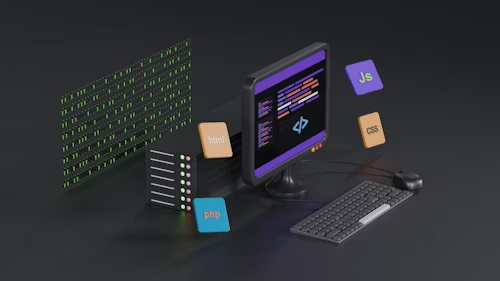
Modernize your legacy software today! Boost security, scale efficiently, improve customer experience, and unlock long-term business growth.
Many businesses depend on software that was introduced years ago to solve an urgent operational problem. At the time, the system may have represented a major improvement. It replaced paper records, automated calculations, centralized customer information, or supported an important internal process.
As the organization grows, however, the software may no longer support the way the business operates. Employees begin creating spreadsheets and manual workarounds. New applications cannot connect easily to the old platform. Reports take too long to prepare, security updates become difficult, and every small change requires disproportionate time and cost.
This is the reality of legacy software.
A legacy system is not simply an old application. It is software that has become difficult, risky, or expensive to maintain relative to the value it provides. Some legacy systems remain technically stable but limit integration, innovation, productivity, and customer experience. Others depend on unsupported technologies, ageing infrastructure, scarce technical expertise, or code that nobody fully understands.
Modernizing legacy software does not always mean discarding everything and starting again. A business may improve the existing application, move it to modern infrastructure, connect it to other platforms through application programming interfaces, replace individual modules, redesign the user interface, or gradually develop a new system.
The appropriate approach depends on the organization’s priorities, budget, risk, data, architecture, and business continuity requirements. What matters is that companies stop treating outdated software as a harmless inconvenience. Left unaddressed, legacy systems can become barriers to growth and sources of operational, financial, and cybersecurity risk.
What Is Legacy Software Modernization?
Legacy software modernization is the process of updating, transforming, integrating, replacing, or retiring outdated applications so that they can support present and future business requirements more effectively.
The objective is not necessarily to adopt the newest technology available. It is to create software that is secure, maintainable, scalable, accessible, and aligned with the organization’s operational goals.
Microsoft’s application modernization guidance presents modernization as a continuing process involving assessment, planning, execution, and maintenance. This is important because modernization is rarely a single technical event. It affects technology, data, employees, workflows, governance, training, and change management.
A company may modernize by moving an application to cloud infrastructure, upgrading its framework, restructuring the code, replacing an obsolete database, introducing APIs, strengthening security, or rebuilding selected components. In some cases, replacing the legacy platform with a commercial product may be the best decision. In others, retaining a reliable core while modernizing the surrounding interfaces may create less risk.
Before selecting an approach, the business must understand why the existing system is no longer adequate and what measurable outcomes modernization should produce.
The Hidden Cost of Keeping Legacy Systems
One reason companies postpone modernization is that the existing software appears to be working. Employees can still log in, transactions are processed, and essential records remain available. Management may therefore assume that retaining the application is cheaper than changing it.
The visible maintenance bill tells only part of the story.
Legacy software creates hidden costs through manual work, duplicated data entry, slow approvals, recurring errors, limited reporting, system downtime, and expensive specialist support. Employees may spend hours transferring information between applications because the systems cannot communicate. Managers may make decisions with outdated data because reports cannot be generated in real time.
Technical debt also increases over time. Temporary integrations, undocumented changes, outdated libraries, and repeated quick fixes make each future improvement more difficult. The organization may become dependent on one developer, employee, or vendor who understands how the system works.
The real cost of legacy software should therefore include lost productivity, delayed innovation, customer frustration, security exposure, missed revenue, and the opportunity cost of employees spending time on work that modern systems could automate.
The Delon Apps article on hidden operational problems slowing business growth explains how inefficient processes and outdated systems can continue draining revenue without attracting immediate management attention.
Modernization Reduces Cybersecurity Risk
Security is one of the strongest reasons to modernize ageing applications.
Older software may depend on operating systems, frameworks, databases, or libraries that are no longer supported by their vendors. Once official support ends, newly discovered vulnerabilities may not receive patches. The application may also lack modern safeguards such as multifactor authentication, detailed audit trails, secure encryption, role based permissions, automated monitoring, and reliable identity management.
The US Cybersecurity and Infrastructure Security Agency warns that unsupported software can create significant security risks because newly identified vulnerabilities may remain unpatched.
Modernization provides an opportunity to review how users are authenticated, how permissions are granted, how sensitive information is stored, and how suspicious activity is identified. It also enables the organization to integrate security into the software development lifecycle instead of adding controls only after an incident.
The OWASP Developer Guide on secure development explains that security practices should be integrated into every stage of software development. Similarly, the NIST Secure Software Development Framework provides practices that organizations can incorporate into their development processes to reduce software vulnerabilities.
Modernization does not automatically make an application secure. A poorly planned migration can introduce new risks. Security requirements, access controls, backup, testing, monitoring, incident response, and compliance must be considered from the beginning.
Modern Systems Improve Operational Efficiency
Legacy systems often force employees to work around the software rather than allowing the software to support their work.
An employee may receive a customer request by email, enter it into one system, copy part of the information into a spreadsheet, request approval through a messaging application, and later update a separate accounting platform. Every manual transfer increases processing time and the possibility of error.
Modern software can centralize workflows, automate recurring actions, and provide greater visibility into the status of work. Information can move between departments without repeated data entry, while automated notifications can remind employees about pending tasks, deadlines, and approvals.
This creates a direct productivity benefit, but it also improves management. Leaders can identify where requests are delayed, which issues require attention, and how performance compares with agreed standards.
However, businesses should not use technology to automate an inefficient process. Before development begins, the organization should map the existing workflow, remove unnecessary steps, clarify ownership, and define the improved process.
The Delon Apps guide to identifying and solving operational bottlenecks explains why organizations should understand process problems before adding more employees or technology.
Modernization Makes Integration Easier
Growing businesses rarely depend on one application. They use systems for sales, accounting, human resources, customer service, inventory, payments, communication, analytics, and document management.
Legacy applications may have been developed before modern integration standards became common. They may store information in proprietary formats, lack usable APIs, or depend on fragile connections created for individual processes.
This creates information silos. Employees cannot see a complete customer or operational record without opening several applications. Information may be inconsistent across departments, while management reports require time consuming reconciliation.
Modernization can expose important functions through secure APIs, introduce an integration layer, consolidate data, or replace isolated applications with a platform designed to work with other systems.
Google Cloud’s explanation of legacy modernization notes that older applications may lack the APIs needed to connect with modern business tools. Improving integration therefore creates value beyond the application being modernized. It allows the organization’s wider technology environment to operate more coherently.
For example, a modern workforce platform can connect employee records, attendance, leave, payroll, expenses, and accounting. Businesses seeking to modernize these functions can explore HRPayHub’s integrated HR, payroll, accounting, and workforce management platform.
Modern Software Supports Business Growth
A system that performed well for one location and a few hundred customers may struggle when the business expands across branches, products, and markets.
Legacy applications may have fixed capacity, inefficient databases, or architectures that cannot distribute workloads effectively. During busy periods, response times increase, transactions fail, and employees experience delays. Adding more hardware may temporarily improve performance without correcting the underlying design problem.
Modernization allows the development team to evaluate how the application should support future growth. The system can be redesigned to accommodate more users, higher transaction volumes, additional locations, and new integrations without requiring a complete rebuild whenever the business expands.
Cloud infrastructure can provide flexible computing resources, but simply moving an inefficient application to the cloud does not make it scalable. The code, database, architecture, monitoring, and deployment practices must also be prepared for growth.
Delon Apps examines this distinction in Managing Scalability in Software Development Projects. A successful modernization programme considers both present performance and the capacity required by the company’s future business model.
It Improves Customer and Employee Experience
Customers compare every digital interaction with the best services they use, not only with a company’s direct competitors.
They expect fast pages, straightforward registration, mobile accessibility, clear navigation, secure transactions, and responsive support. A dated interface, repeated errors, or complicated process can make an otherwise dependable company appear difficult to work with.
Employees have similar expectations. They are less productive when systems require excessive clicks, duplicate entries, complicated workarounds, or specialist knowledge for basic tasks. Frustration also encourages employees to create unofficial processes that may introduce errors and security risks.
Legacy modernization allows the organization to redesign the experience around genuine user needs. This may involve a responsive web interface, mobile access, self-service options, better search, simplified forms, accessibility improvements, and clearer status updates.
User research should guide these decisions. Replacing an old interface with a visually modern design will not solve the problem if the underlying workflow remains confusing.
The organization should measure task completion time, abandonment, error rates, support requests, employee adoption, and customer satisfaction. The objective is not simply to make the application look new. It is to make important activities easier, faster, and more reliable.
Modernization Enables Better Data and Decisions
Legacy systems may contain years of valuable business information, but the data can be difficult to access or analyze.
Records may be stored in incompatible formats, duplicated across databases, or limited to fixed reports created when the software was first developed. Managers may depend on employees to export information manually and combine it in spreadsheets before meaningful reports can be prepared.
Modernization can improve data quality, establish clearer ownership, create reliable reporting pipelines, and make information available through dashboards and analytical tools. It may also support forecasting, anomaly detection, personalization, and artificial intelligence where the underlying data is accurate and properly governed.
Data migration must be managed carefully. Moving inaccurate, duplicated, or poorly classified information into a modern platform simply transfers the old problem. The company must determine what information should be retained, cleaned, transformed, archived, or securely deleted.
Modern reporting gives leaders a clearer view of revenue, customer behavior, operating costs, service quality, and employee performance. It also provides the evidence needed to determine whether the modernization investment is producing measurable value.
Modernization Creates a Foundation for Innovation
Legacy technology can make even a small product or process change expensive.
A business may want to introduce online self-service, launch a mobile application, connect to a payment provider, automate customer support, or use artificial intelligence. The existing system may not support the required integration or may be too fragile to modify safely.
As a result, competitors with more adaptable platforms can test ideas and bring improvements to market faster.
Modernization creates a stronger foundation for innovation. Modular architecture, APIs, automated testing, cloud services, and reliable deployment pipelines make it easier to introduce new capabilities without destabilizing the entire application.
The company can experiment with a limited feature, collect feedback, and expand only when the idea has demonstrated value. Delon Apps’ article on the meaning and importance of an MVP explains how businesses can validate ideas before investing in a complete product.
Modern applications may also support artificial intelligence, but AI should address a defined business requirement rather than being included simply because it is popular. The article How AI Is Changing the Future of Software Development examines how AI can support development, testing, automation, security, and product innovation.
It Reduces Dependence on Scarce Technical Expertise
Some legacy systems depend on programming languages, infrastructure, and development tools that fewer professionals now use.
The organization may rely on one employee, former contractor, or vendor to keep the application operational. When that person becomes unavailable, essential knowledge can disappear. Even minor improvements may take weeks because the business must locate someone who understands both the technology and the undocumented decisions behind it.
This creates operational and succession risk.
A modernization project provides an opportunity to document the system, simplify its architecture, introduce current development practices, and distribute knowledge across a broader team. Modern tools may also make recruitment, onboarding, testing, and support easier.
Documentation should cover business rules, integrations, data structures, deployment, permissions, common failures, and recovery procedures. Knowledge transfer should occur throughout the project rather than being postponed until the final handover.
Organizations that do not want to recruit and manage a large internal development department can work with an external technology partner. Delon Apps discusses this model in The Smarter Way to Build Software Without Managing a Tech Team.
Choosing the Right Modernization Strategy
Modernization is not a choice between keeping everything and rebuilding everything.
Different applications may require different strategies. AWS Prescriptive Guidance describes seven common migration approaches: rehost, re-locate, re-platform, re-factor or re-architect, re-purchase, retire, and retain.
Rehosting moves an application with minimal code changes, while re-platforming introduces selected improvements. Refactoring changes the architecture to take advantage of modern capabilities. Repurchasing replaces the application with another product. Retiring removes software that no longer creates sufficient value, while retaining may be appropriate where the system remains stable and strategically useful.
A company can also modernize incrementally. It may improve the interface, add APIs, replace one module, move selected workloads, and keep a reliable core in operation throughout the transition.
The decision should be based on business value, technical condition, security risk, cost, dependencies, and the expected lifespan of the application. A mission critical system supporting regulated operations may require a more cautious strategy than an isolated internal tool.
Modernizing Without Disrupting Operations
Fear of disruption is one reason organizations postpone modernization. That concern is legitimate. A poorly managed project can interrupt operations, damage data, exceed its budget, or produce a new system that employees refuse to use.
The answer is not indefinite delay but controlled planning.
Modernization should begin with an assessment of the company’s application portfolio. The business must identify system owners, users, processes, integrations, data, infrastructure, maintenance costs, security risks, and operational dependencies. It should then create a business case and prioritized roadmap.
The programme should be divided into manageable stages. Prototypes and pilot releases can test assumptions before wider deployment. Important data should be backed up, cleaned, migrated, and validated. The old and new systems may need to run in parallel temporarily, with clear conditions for completing the transition.
Testing should cover functionality, performance, security, integration, data accuracy, disaster recovery, and user acceptance. Employees should receive communication and training early enough to understand why the modernization is necessary and how their work will change.
Delon Apps’ approach to building reliable software solutions emphasizes requirements analysis, scalable architecture, secure development, testing, deployment, and continuing support. These disciplines become especially important when the software being changed already supports critical business operations.
Measuring the Return on Modernization
A modernization programme should be connected to measurable business outcomes.
Before work begins, the company should establish its current position. Relevant measures may include maintenance expenditure, system downtime, transaction time, employee hours spent on manual work, error rates, customer complaints, support tickets, security findings, and the time required to introduce a new feature.
After implementation, the same measures can be reviewed to determine whether the investment is producing value.
Some benefits are financial, such as reduced maintenance costs or increased revenue. Others are strategic, including improved security, faster product development, better data, easier recruitment, and reduced dependence on one vendor or employee.
Modernization should not be judged solely by whether the new application was delivered. A technically successful project can still fail if employees avoid the platform, customers find it difficult to use, or the company does not change the surrounding processes.
Success means that the modernized software helps the business operate more securely, efficiently, and competitively.
How Delon Apps Supports Legacy Software Modernization
Modernizing an important application requires more than writing new code. It requires business analysis, architecture, software engineering, data migration, integration, quality assurance, cybersecurity, deployment planning, and change support.
Delon Apps’ custom software development services help organizations assess outdated applications and develop secure, scalable, and maintainable solutions aligned with their operational requirements.
Support may include application assessment, requirements analysis, architecture redesign, web and mobile development, API integration, database modernization, cloud migration, interface redesign, automated testing, data migration, and continuing maintenance.
Delon Apps can also help a business determine whether an application should be improved, integrated, replaced, or rebuilt. The purpose is not to recommend the most technically dramatic option. It is to select a practical route that protects business continuity while creating measurable long term value.
Conclusion
Legacy software may continue operating for years while quietly increasing costs, slowing employees, limiting integration, weakening customer experience, and exposing the organization to avoidable security and continuity risks.
Modernization enables a company to replace fragile workarounds with efficient processes, connect isolated systems, improve access to data, support future growth, and create a stronger foundation for innovation.
The process does not always require an immediate complete rebuild. The organization can re-host, re-platform, integrate, refactor, replace, retire, or retain different applications according to their value and technical condition. What matters is using a structured assessment and roadmap instead of waiting for a serious failure to force an emergency decision.
Do not wait until unsupported technology, a cybersecurity incident, system failure, or loss of specialist knowledge disrupts your operations. Contact Delon Apps today to assess your legacy applications and create a secure, phased modernization plan before maintenance costs rise further and competitors gain ground with faster, more adaptable technology. Every month of delay can deepen technical debt and make the eventual transition more difficult, expensive, and risky.
Suggested Reads

 Teniola Makinde
Building a Lean Business Model with Virtual Assistant Support
 Teniola Makinde
Using Resolution Consulting to Rebuild Customer Trust
 Teniola Makinde
The Role of Software Development in Business Growth and Digital Transformation
 Teniola Makinde
Common Myths About Staff Outsourcing That Businesses Should Stop Believing
 Teniola Makinde
How Automated Timesheets Simplify Remote Employee Payroll
 Teniola Makinde
How Virtual Assistants Help Improve Customer Retention
.jpg) Teniola Makinde
Teniola Makinde
How Resolution Consulting Can Improve Employee Relations
Teniola Makinde
Why Businesses Should Modernize Their Legacy Software Systems
 Teniola Makinde
How Delon Apps Helps Businesses Resolve Complex Organizational Challenges
 Teniola Makinde