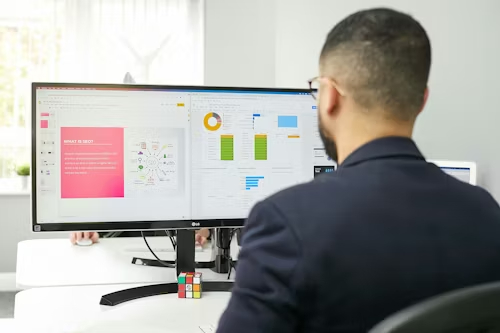
Discover how to eliminate remote work chaos using smart employee monitoring, streamlined payroll automation, and the right infrastructure.
The traditional office environment is no longer the default setting for the modern workforce. Over the past few years, the mass migration to home offices, co-working spaces, and digital nomad lifestyles has fundamentally transformed the global economy. For many employees, this flexibility is non-negotiable. For employers, it offers access to a borderless talent pool and drastically reduced overhead costs.
However, beneath the surface of this flexible utopia lies a hidden reality that many business leaders are hesitant to admit that without the right infrastructure, remote work can quickly devolve into operational chaos.
When managers cannot see their teams, communication breaks down, productivity becomes difficult to measure, and administrative compliance turns into a nightmare. The solution isn't to force employees back into the office, but rather to implement intelligent control systems that foster accountability, streamline payroll, and maintain regulatory compliance across borders. In this comprehensive guide, we will explore the roots of remote work chaos and detail how companies can regain control using enterprise grade solutions.
The Current State of the Global Remote Workforce
To understand the chaos, we must first look at the scale of the remote work revolution. According to recent data from Forbes, by 2025, an estimated 32.6 million Americans will be working remotely, which equates to roughly 22% of the workforce. Globally, millions more are operating in hybrid or fully remote capacities.
This shift has created unprecedented opportunities. Companies are no longer restricted to hiring talent within a 30-mile radius of their physical headquarters. However, this decentralized model introduces a unique set of challenges:
- Visibility Gaps: How do you know if an employee is actively working on a client project or simply moving their mouse to appear online?
- Communication Silos: Without watercooler chats and physical meeting rooms, vital information can easily slip through the cracks.
- Compliance Risks: Hiring across different countries and regions introduces complex tax laws, labor regulations, and payroll hurdles.
- Data Security: Distributed teams accessing company servers from personal networks increase the risk of cyber threats and data breaches.
These challenges create a compounding effect. A lack of visibility leads to micromanagement, which leads to employee burnout, which ultimately results in high turnover rates. To break this cycle, businesses must transition from a mindset of surveillance to a framework of structured monitoring.
Why Remote Work Without Systems Fails
The phrase "remote work chaos" isn't an exaggeration. When businesses transition to a distributed model without updating their management protocols, they often rely on outdated metrics to gauge success. If a manager cannot walk the floor to see who is working, they may resort to demanding constant Slack updates or scheduling excessive, time wasting video check-ins.
This chaotic approach creates friction on both sides. Employees feel untrusted and bogged down by performative tasks meant solely to prove they are working. Meanwhile, employers remain in the dark about actual output, struggling to identify workflow bottlenecks or accurately bill clients for billable hours.
Furthermore, the administrative burden of managing a chaotic remote team is immense. HR departments are left scrambling to reconcile spreadsheets, track paid time off across different time zones, and ensure that local tax obligations are met. When operations are fragmented, scaling the business becomes nearly impossible.
The Solution: Smart Employee Monitoring Over Micromanagement
The antidote to remote work chaos is visibility. However, modern visibility doesn't mean standing over someone's shoulder; it means leveraging technology to gain actionable insights into how work is being done.
The market for these solutions is exploding. According to industry reports from SkyQuest Technology, the global employee monitoring software market is projected to grow from $1.6 billion in 2025 to a staggering $4.74 billion by 2033. This growth is driven directly by the need for companies to secure their remote workflows and optimize productivity without relying on overbearing micromanagement.
This is exactly where DelonApps steps in. As a global technology and IT solutions firm headquartered in Boston, with primary talent hubs in Lagos, Nigeria, and Liverpool, UK, DelonApps understands the intricacies of managing a distributed workforce. To support companies with distributed teams, DelonApps provides dedicated tools for real time remote employee monitoring.
Instead of relying on guesswork, business leaders can implement integrated tools that help managers maintain oversight through:
- Smart time tracking functionality. This ensures that hours logged correlate directly to specific projects or tasks, which is vital for accurate client billing and resource allocation.
- Periodic screenshots and keystroke logs. While this may sound intrusive to some, when implemented transparently, it protects both the employer and the employee. It provides a clear, undeniable record of work completed, eliminating disputes over time theft or productivity.
- Comprehensive productivity reports. These analytics allow managers to identify their highest performers, spot employees who may be struggling or nearing burnout, and optimize operational workflows accordingly.
By utilizing these transparent Secure Remote Employee Monitoring solutions, businesses can replace the anxiety of the unknown with hard, objective data. Employees are judged entirely on their output and efficiency, creating a fairer, more merit based work environment.
Sourcing the Right Talent for a Remote World
Of course, monitoring software is only effective if you have the right people to monitor. The success of a remote team hinges on hiring self starters who possess strong communication skills and the discipline to thrive outside a traditional office.
Because DelonApps operates on a global scale, they recognize that finding top tier remote talent requires specialized platforms. This is why their recruitment and job portal arm, DelonJobs, is designed to connect talent with verified employers. Operating out of their primary office on the 7th Floor of Mulliner Towers in Ikoyi, Lagos State, DelonJobs lists a variety of onsite, hybrid, and fully remote roles.
When companies utilize specialized platforms to source pre-screened tech talent or virtual assistants, they drastically reduce the friction of the onboarding process. Furthermore, by hiring premium talent primarily out of Nigeria to service offshore clients worldwide, DelonApps offers highly competitive pricing, advertising up to 70% cost savings for businesses utilizing their outsourcing services. Combining elite talent sourcing with robust monitoring software is the first major step toward eliminating operational chaos.
Bringing Order to Administrative Chaos with HRPayHub
Tracking productivity and securing top talent solves the operational side of remote work, but what about the administrative side? Managing human resources across state lines or international borders is notoriously complex.
When a team is distributed, payroll can no longer be managed on a simple Excel spreadsheet. Different jurisdictions have vastly different requirements regarding employee leave, overtime laws, and tax withholdings. Failing to adhere to these regulations can result in severe financial penalties, legal action, and a damaged corporate reputation.
This is where the true administrative solution comes into play. Designed as a comprehensive HR, payroll, and accounting solution, HRPayHub is DelonApps' flagship proprietary cloud software. This platform acts as the central nervous system for managing a distributed workforce.
HRPayHub allows businesses to easily:
- Automate complex payroll processing and efficiently manage employee leave. Time off requests, sick days, and holiday pay are calculated automatically, freeing HR departments from endless manual data entry.
- Ensure strict tax and regulatory compliance by handling PAYE, VAT, and WHT filings. For example, dealing with the UK government's Pay As You Earn (PAYE) system requires precise calculations of income tax and national insurance contributions. HRPayHub automates these filings.
- Mitigate cross border risks. The platform is specifically tailored for companies operating within Nigeria and the UK, taking the guesswork out of international tax codes.
By integrating time tracking data directly into an automated payroll system, businesses create a seamless pipeline. Hours worked are verified by the monitoring software, instantly translated into payroll via HRPayHub, and dispersed to employees while remaining 100% compliant with local tax authorities. This eliminates human error, ensures employees are paid accurately and on time, and completely resolves the administrative chaos of remote work.
Cultivating a Culture of Transparency and Trust
It is important to address the psychological aspect of implementing these control systems. A common misconception is that introducing employee monitoring software and automated HR protocols signals a lack of trust. In reality, the exact opposite is true.
Chaos breeds suspicion. When expectations are unclear and productivity is unmeasured, managers naturally become anxious, and employees feel unappreciated. By implementing clear, structured systems like smart time tracking and reliable, automated payroll, you create a foundation of objective truth.
When employees know exactly how their performance is being measured and are confident that their payroll and leave are being managed accurately by systems like HRPayHub, they can focus entirely on their work. They don't have to spend hours typing out daily summaries of their activities or worrying about whether their cross border taxes are being filed correctly. Structure creates freedom.
The Financial Upside of Managed Remote Work
Fixing the chaos of remote work is not just about reducing stress; it is fundamentally about the bottom line. Operational inefficiencies quietly drain corporate resources. When remote work is mismanaged, companies bleed capital through:
- Time Theft: Paying for hours that were not actually worked.
- Administrative Bloat: Hiring excessive HR personnel to manually process complex international payrolls.
- Compliance Fines: Paying penalties for failing to accurately withhold taxes like VAT or WHT in foreign jurisdictions.
- High Turnover: The hidden costs of constantly recruiting and retraining staff who leave due to chaotic management or burnout.
By consolidating these functions into enterprise grade solutions, businesses realize immediate ROI. Leveraging DelonApps' technology suite means mitigating risk while optimizing every dollar spent on payroll. When you factor in the ability to source global talent through DelonJobs at a fraction of the cost of local hires, while maintaining strict oversight, the financial benefits are undeniable.
Expanding the Ecosystem: The Next Phase of Remote Work Control
While deploying real time remote employee monitoring tools such as smart time tracking, periodic screenshots, keystroke logs, and productivity reports provide immediate visibility, these tools operate best within a holistic management framework. Remote work chaos is not just a technological failure; it is often a failure of process and communication.
To elevate a remote team from merely monitored to highly optimized, business leaders must address policy creation, legal compliance, cybersecurity, and organizational change management.
The Architecture of a Strong Remote Work Policy
Before a single keystroke is logged or a time tracker is activated, a company must establish a definitive Remote Work Policy. This document acts as the constitution for your distributed team, outlining exactly what is expected and how success will be measured. A robust policy eliminates the ambiguity that breeds operational chaos.
Key Components of an Airtight Policy:
- Core Collaboration Hours: While remote work offers flexibility, complete asynchronous work can lead to massive delays in communication. Establish core hours (e.g., 10:00 AM to 2:00 PM EST) where all team members, regardless of their time zone, are required to be online and available for synchronous meetings and rapid response collaboration.
- Service Level Agreements (SLAs) for Communication: Define acceptable response times for different channels. For example, Slack messages might require a response within one hour during core hours, while emails have a 24-hour turnaround expectation.
- Clear Tool Usage Guidelines: Specify exactly which platforms are used for which purposes.
- Monitoring Transparency Clause: Explicitly detail how and when monitoring software will be used. Transparency is paramount to maintaining trust and protecting both the employer and the employee.
Navigating the Ethics and Legalities of Global Monitoring
Managing human resources across state lines or international borders is notoriously complex. Different jurisdictions have vastly different requirements, and this applies heavily to employee privacy and data monitoring laws.
When you source global talent, you must ensure your monitoring practices do not violate local labor laws. For instance, the European Union's General Data Protection Regulation (GDPR) has strict rules regarding employee data collection, requiring explicit consent and a clear, legitimate business need for the monitoring.
Best Practices for Ethical and Legal Monitoring:
- Never Monitor in Secret: Covert surveillance destroys morale and often violates labor laws. Employees must be fully aware of what data is being collected (e.g., screenshots, application usage) and how it will be used.
- Provide a Clock-Out Feature: Employees must have the ability to turn off monitoring software when they are on their lunch break or off the clock. This ensures their personal privacy is respected outside of working hours.
- Limit Data Collection to Business Tools: Configure your software to only track activity relevant to work. If an employee uses a personal device, the software should ideally partition work applications from personal applications.
Mastering Change Management: Rolling Out Monitoring Tools
Introducing monitoring software to an existing team is often met with resistance. Employees may perceive it as a sudden lack of trust or a shift toward micromanagement. How leadership communicates this transition is the difference between a successful rollout and an organizational mutiny.
The Workflow, Not Surveillance Approach:
Leadership must frame the introduction of monitoring tools around operational efficiency and fairness, rather than surveillance. Emphasize the following benefits to the team:
- Objective Performance Reviews: Explain that promotions and bonuses will be based on undeniable, hard data rather than subjective managerial opinions or office politics.
- Burnout Prevention: Highlight that productivity reports help managers spot when an employee is consistently working overtime or struggling with their workload, allowing leadership to intervene and redistribute tasks.
- Streamlined Payroll: Remind the team that tracking hours accurately feeds directly into reliable systems like HRPayHub, ensuring they are paid accurately and on time without manual data entry.
Securing the Distributed Perimeter: Cybersecurity and Managed IT
When an organization's perimeter expands from a single office building to hundreds of home networks across the globe, the risk of a cyberattack increases exponentially. Distributed teams accessing company servers from personal networks increase the risk of cyber threats and data breaches.
Implementing monitoring software helps ensure employees aren't engaging in risky digital behavior, but it must be paired with robust technical safeguards. Companies managing distributed talent should highly consider comprehensive Managed IT services, encompassing network management, IT security, compliance, and 24/7 technical support.
Vital Security Protocols for Remote Teams:
- Zero Trust Architecture: Never assume a user's identity is secure just because they have the right password. Implement Multi Factor Authentication (MFA) across all company applications, especially for sensitive platforms handling HR and accounting data.
- Endpoint Management: Ensure that all devices used for work (laptops, mobile phones) have up-to-date antivirus software, encrypted hard drives, and the ability to be remotely wiped by the IT department if a device is lost or stolen.
- Secure Network Access: Require remote employees to use a Virtual Private Network (VPN) when accessing company servers, particularly if they are working from public Wi-Fi networks in coffee shops or co-working spaces.
Shifting the Mindset: From Output to Outcomes
Finally, to truly fix the chaos of remote work, leadership must evolve how they define "productivity." While monitoring software is incredibly valuable for tracking time and ensuring employees are active, the ultimate goal of any business is achieving results.
Time tracking should be used as a baseline to understand how work is being done, identify bottlenecks, and ensure accurate billing. However, managers should transition their coaching style to focus on outcomes.
If an employee can complete their tasks with high quality in fewer hours, they should be rewarded for their efficiency, not punished with more busy work. By utilizing transparent monitoring solutions to gather objective data, employees are judged entirely on their output and efficiency, creating a fairer, more merit based work environment.
By marrying the strict, verifiable data of monitoring software with an empathetic, outcome driven management style, businesses can build resilient, highly profitable remote teams that outpace their traditional in-office competitors.
Conclusion
The era of remote work is here to stay, but the era of remote work chaos must come to an end. Businesses can no longer afford to operate distributed teams on good faith and outdated spreadsheets. Scaling a global workforce requires visibility, accountability, and seamless administrative support. By combining the right talent, smart remote monitoring protocols, and robust payroll automation, organizations can transform their remote operations from a chaotic liability into a streamlined, highly profitable asset.
If your business is struggling to maintain visibility over distributed teams or drowning in the complexities of cross-border payroll compliance, the time to act is now. Every day spent managing chaos is a day of lost productivity and revenue. Do not let your remote operations hold your growth hostage. Take control of your workforce today by exploring tailored business packages on the HRPayHub platform or discover the full suite of enterprise monitoring and BPO solutions by visiting the DelonApps Main Website. Secure your workflow, automate your compliance, and scale your business with confidence.
Suggested Reads
 Teniola Makinde
Building a Lean Business Model with Virtual Assistant Support
 Teniola Makinde
Using Resolution Consulting to Rebuild Customer Trust
 Teniola Makinde
The Role of Software Development in Business Growth and Digital Transformation
 Teniola Makinde
Common Myths About Staff Outsourcing That Businesses Should Stop Believing
 Teniola Makinde
How Automated Timesheets Simplify Remote Employee Payroll
 Teniola Makinde
How Virtual Assistants Help Improve Customer Retention
.jpg) Teniola Makinde
Teniola Makinde
How Resolution Consulting Can Improve Employee Relations
 Teniola Makinde
Why Businesses Should Modernize Their Legacy Software Systems
 Teniola Makinde
How Delon Apps Helps Businesses Resolve Complex Organizational Challenges
 Teniola Makinde